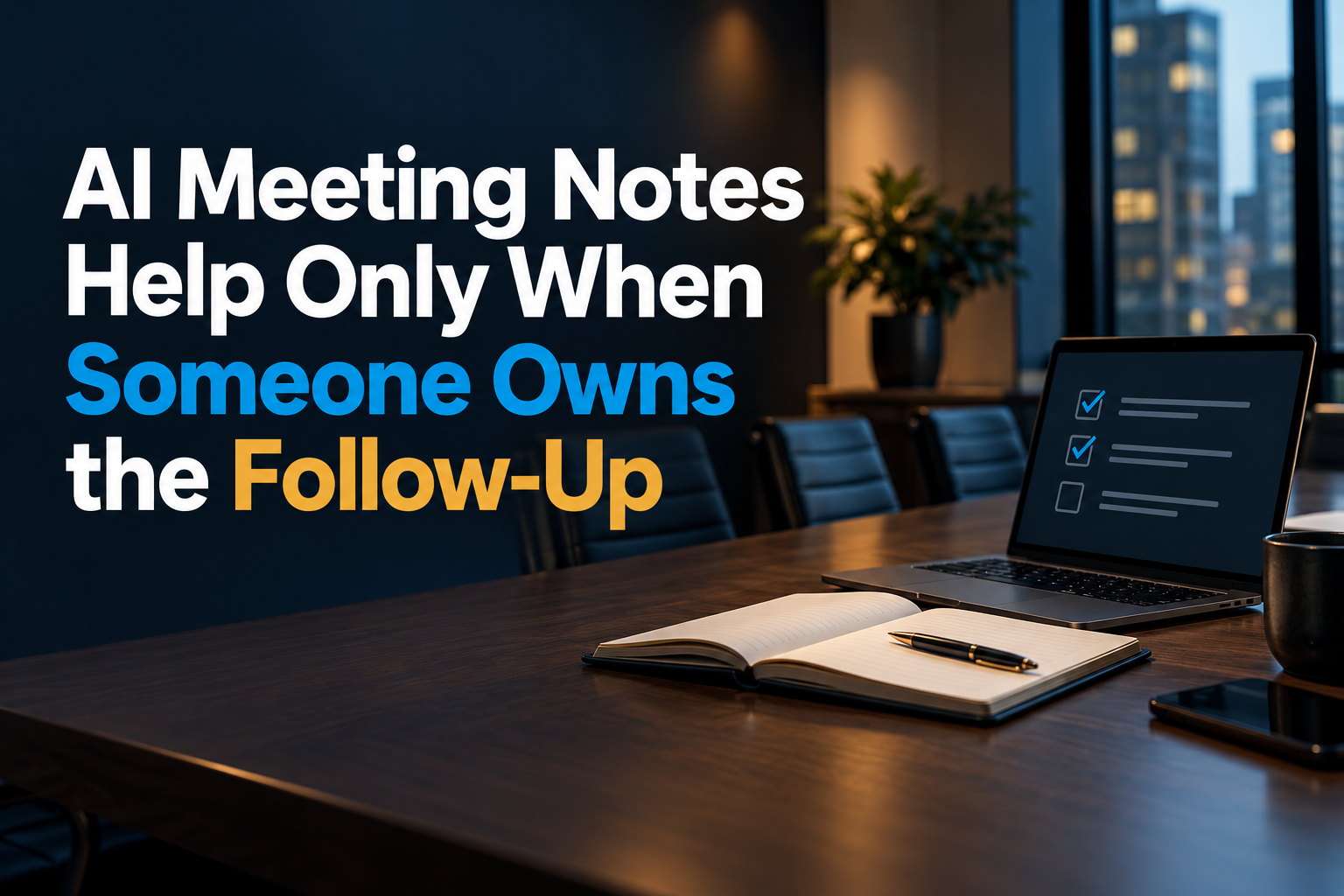
AI meeting notes can save time when they produce a clear record of decisions, assigned tasks and deadlines. They create more work when the summary becomes another document that nobody checks.
The useful workflow starts before the meeting. Decide what the tool should capture, who may access the transcript and which person will confirm the final notes before anyone acts on them.
Define the Output Before the Meeting
Choose a simple format that matches how your team already works. The final note should identify decisions, each task owner, the due date and any question that still needs an answer. If the meeting does not produce one of those items, the summary should not invent it.
Pick one destination for approved notes, such as a project folder, task system or customer record. Saving copies in several places makes it harder to know which version is current.
Let AI Draft, Not Decide
Current meeting tools can use a transcript to create summaries, notes and follow-up tasks. Microsoft’s Teams recap guidance also explains that access and retention depend on organizational policies.
That makes AI useful for preparing a first draft, but not for deciding what the team promised. Names, numbers, deadlines and speaker attribution can be wrong. The people in the meeting remain responsible for the record.
Protect the Conversation
Tell participants when a meeting will be recorded or transcribed, and follow the rules that apply to your organization and location. Do not place confidential personnel, legal, health, financial or customer information into a tool until the business has reviewed its access, storage and retention settings.
NIST’s AI Risk Management Framework encourages organizations to manage risks in the context where AI is used. For meeting notes, that means limiting the information collected, controlling access and knowing who can correct or delete the record.
Assign One Human Reviewer
Name one person to compare the summary with the meeting while the discussion is still fresh. That reviewer should correct important facts, remove unsupported conclusions and confirm that every action item has an owner and a realistic deadline.
The review does not need to become a second meeting. Use a short checklist and send only the corrected version to the people who need it.
Move Tasks Into the Work
A summary becomes useful when decisions and assignments reach the system where employees already manage work. Transfer approved tasks promptly, notify the owner and keep a link to the source note when context matters.
Magic Mile Media’s AI Implementation for Business approach starts with the problem, not the tool. Test one recurring meeting, then compare time saved, corrections required and missed follow-up before expanding the workflow.
Questions Business Owners Often Ask
Should every meeting be transcribed?
No. Skip transcription when the discussion is highly sensitive, informal or unlikely to produce decisions and tasks.
Who should review AI meeting notes?
Choose someone who attended, understands the decisions and has authority to correct the record.
How quickly should notes be reviewed?
Review them the same day when possible, before memories fade and employees begin acting on an incorrect summary.
What should we measure during a test?
Compare preparation time, corrections, missed assignments and whether tasks reach the right owner by the deadline.