
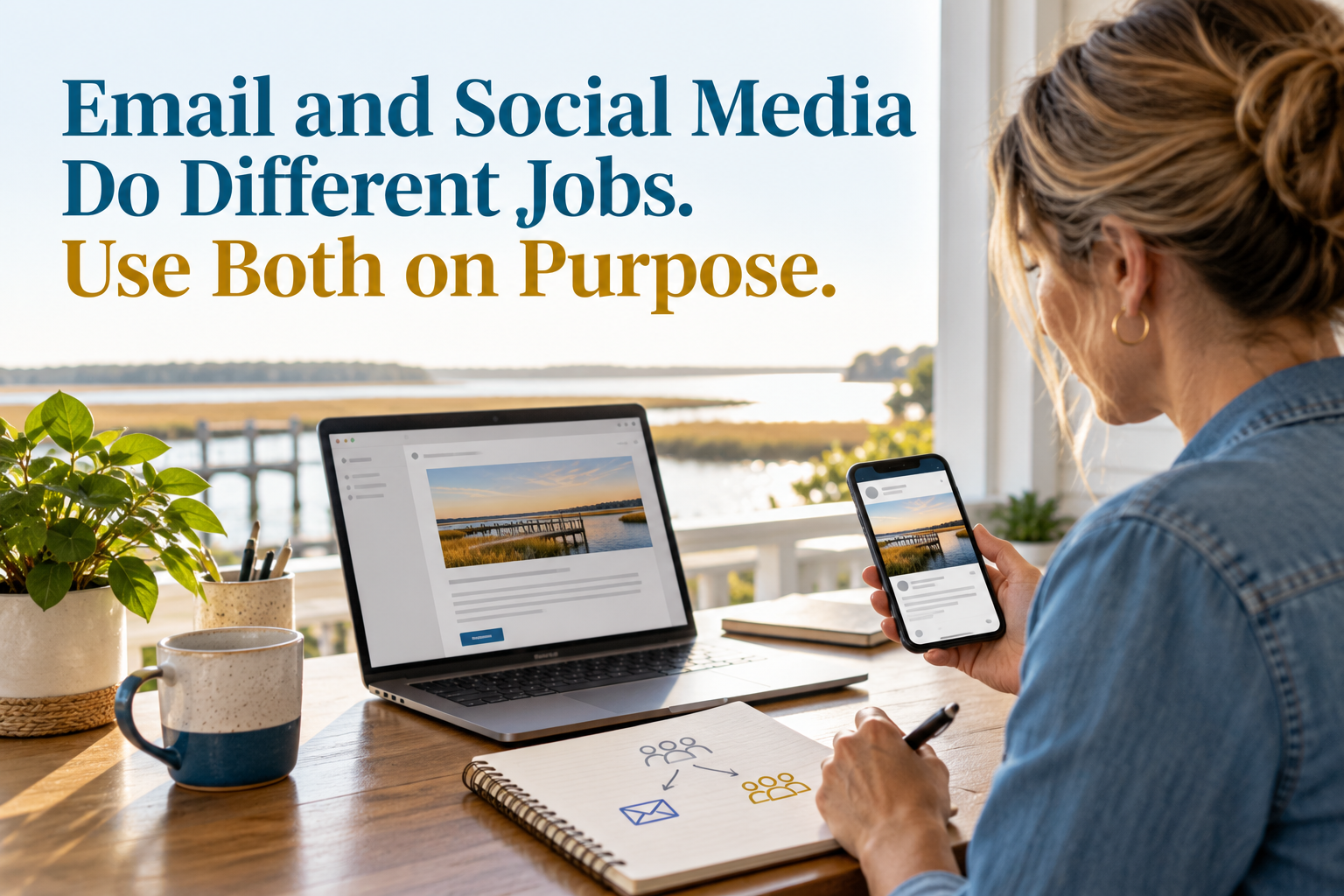
Email and social media are not substitutes. Social media is better for public discovery, conversation and visible proof that a business is active. Email is better when a known group needs a specific message, a reliable next step or information that should not depend on a feed.
Choose the channel by the job, not by habit. Many important messages need both channels, but each version should reflect how people use that space.
Use Social Media for Discovery and Public Conversation
Social media helps a business reach beyond its current customer list. It is useful for showing daily work, answering common questions, sharing community involvement and giving people something easy to discuss or share.
Distribution is not guaranteed. Meta’s October 13, 2026 explanation says Facebook ranking uses engagement and thousands of other signals to personalize Feed and Reels. That makes social media valuable for discovery, but risky as the only path for a message every customer must receive.
Use Email for Known Audiences and Clear Next Steps
Email works well for appointment details, event reminders, product updates, newsletters, policy changes and offers meant for people who have chosen to hear from the business. The message arrives in an address the customer controls and can be saved, searched or forwarded.
Do not treat every subscriber the same. Current Mailchimp guidance recommends sending to segments so subscribers receive content that better matches their interests. A customer, donor, member and prospect may need different versions of the same update.
Match the Channel to Urgency and Control
If a customer must know about a closing, schedule change or account issue, use a direct channel such as email, text or phone based on the relationship and permission. A social post can support the notice, but it should not carry the entire burden.
Commercial email also brings responsibilities. The Federal Trade Commission’s CAN-SPAM guidance requires accurate sender information and a working way to opt out. Use a proper email platform and keep the list clean.
Let the Channels Support Each Other
A social post can invite interested people to subscribe for detailed updates. An email can point readers to a public video, event discussion or useful social post. The channels work best when each adds value instead of repeating identical copy.
For a promotion, social media might introduce the idea and answer public questions. Email can deliver the dates, eligibility and direct link to the right segment. Customer service can then use both responses to improve the next message.
Use a Four-Question Decision Test
- Who must receive this message?
- Is the message public, personal or account-specific?
- How quickly must the audience act?
- Should the information remain easy to find later?
If the answers point in different directions, use both channels with different roles. Write one source message first, then adapt the opening, detail and next step for each audience.
Questions Business Owners Often Ask
Should email replace our social media?
No. Email reaches known subscribers, while social media helps people discover and publicly engage with the business.
Can we post the same message in both places?
Keep the facts consistent, but adapt the format. Social copy should be easy to understand quickly, while email can provide more detail and a direct next step.
Which channel is better for urgent changes?
Use a direct channel for people who must know, then support it with a public post. Do not assume every follower will see a feed update in time.
How often should we email?
Email when you have something relevant for that segment and can set a clear expectation. Consistency matters more than copying a generic frequency.