
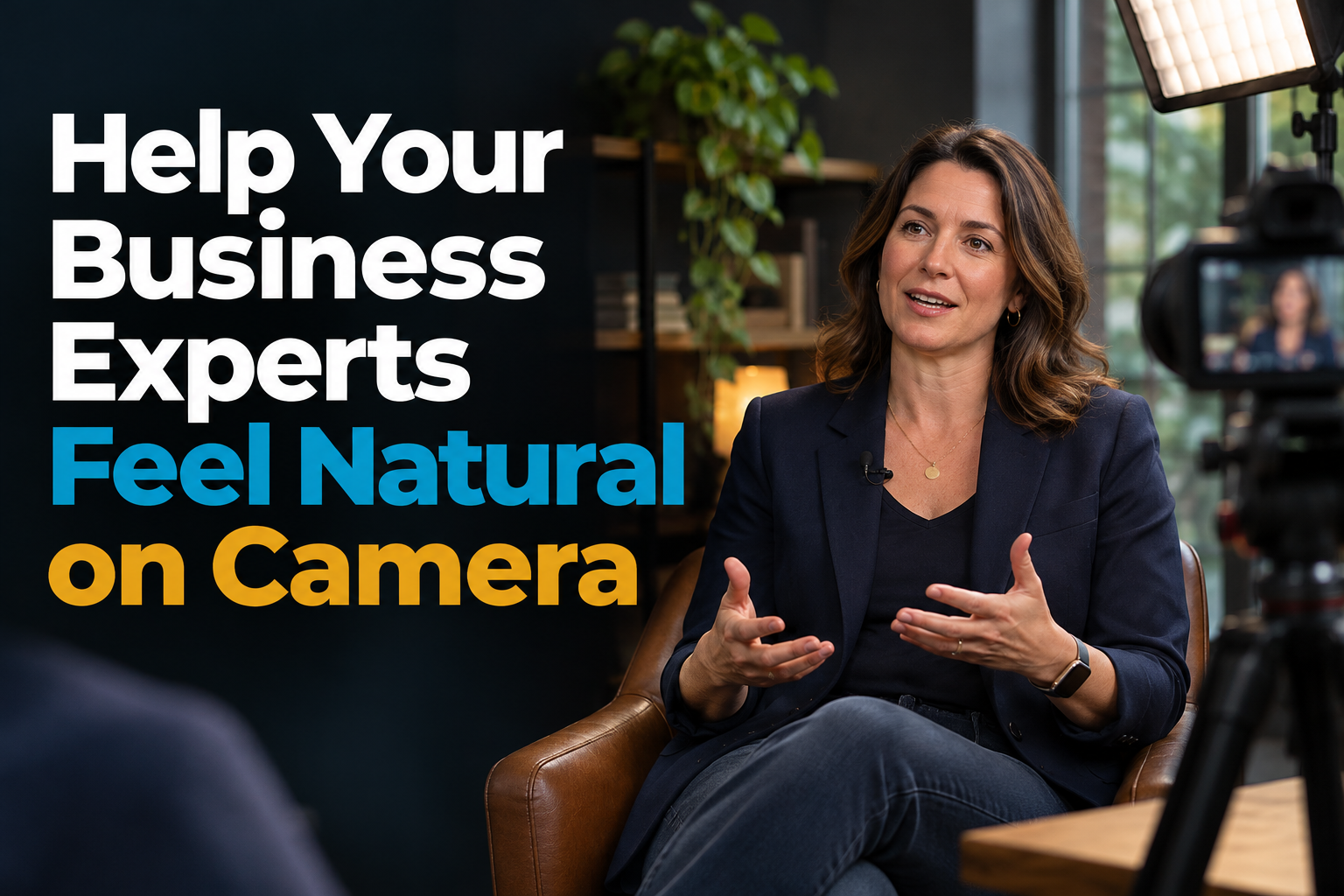
A knowledgeable employee does not need to become a performer to be useful on video. The best session gives that person a clear subject, a calm setting and permission to answer in their own words.
Comfort usually comes from the production process, not from telling someone to relax. Short answers, familiar questions and patient coaching protect accuracy while helping real expertise sound natural.
Start With the Purpose, Not the Performance
Explain who will watch the video and what they need to understand. A service technician may be helping a customer recognize a problem, while an office manager may be explaining what to expect before an appointment.
Choose one useful point for each answer. When the speaker knows the job of the video, there is less pressure to sound impressive or cover every detail at once.
Ask Questions Instead of Giving a Script
Prepare a short list of questions in the order a customer might ask them. Share the topics ahead of time so the employee can check facts, examples and any limits on what should be discussed.
During recording, let an interviewer stand beside the camera and have a normal conversation. A memorized paragraph can make a capable person listen for the next line instead of thinking about the question. Talking points keep the answer accurate without flattening the speaker’s normal voice.
Record Short Answers and Use Retakes
Ask for one complete thought at a time. If the answer becomes long, pause and divide it into a clear opening, one example and a practical next step. The editor can assemble the strongest accurate parts without pretending the speaker delivered everything in one flawless take.
Make retakes routine. Correct a fact, shorten a sentence or start again after a distraction without treating the moment as a failure. That permission often lowers tension faster than another rehearsal.
Make the Setting Familiar and the Crew Small
Whenever practical, record where the employee already works. A familiar office, shop, kitchen or jobsite can give the person something real to reference and reduce the feeling of being placed on a stage.
Keep only the people and equipment needed for a safe, professional session. Test sound, lighting and framing before the expert sits down. Waiting while a crew solves technical problems can make nervousness worse.
Coach for Accuracy, Not Personality
Give specific notes such as “answer the question first,” “replace that acronym” or “show the part you are describing.” Avoid asking the person to be more energetic, polished or entertaining without explaining what the viewer needs.
Watch for signs that the speaker needs a break. The goal is not to erase pauses or regional speech. It is to help the employee communicate reliable information in a way that still sounds like them.
Questions Business Owners Often Ask
Should an employee memorize the questions?
No. Share the topics and important facts, then let the interviewer ask each question naturally during the session.
How long should each answer be?
Long enough to complete one useful point. Many answers become clearer when they can be delivered in a few sentences rather than one long explanation.
What if the employee keeps looking at the interviewer?
That can work well for an interview-style video. Decide on the eyeline before recording and keep it consistent across the session.
When should a business use professional help?
Consider it when the message is complex, the recording cannot be repeated or the finished video must meet a consistent brand and technical standard.